
"class there"
6000 article(s) found

Description of 93 points Flavor and Flavor of Sheffield Coffee washed with Class I Water in Kohir, Ethiopia
For the exchange of professional baristas, please follow the coffee workshop (Wechat official account cafe_style) ■ country: Ethiopia ■ Manor:-■ producing area: Yejia Sheffield ■ Variety: Ethiopian Native species ■ treatment method: washing ■ Harvest time: 2016 Cup Test report: cup Test report: Koch Coffee has become more and more famous in Taiwan in recent years, of course, it has also caused a lot of mistakes.
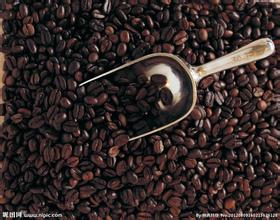
Name of Indonesian coffee beans how many kinds of coffee beans are there in Indonesia
Manning: the palate is rich and solid, with a pleasant sour taste. The smell is mellow, the acidity is moderate, the sweetness is rich and very intriguing, it is suitable for deep baking and exudes a strong aroma. The gentleman in coffee-- Sumatra Mantenin is a first-class coffee bean growing in the plateau and mountain area at an altitude of 750-1500 meters. It is of first-class manning quality produced by Takengon and Sidikalang.

What kind of experience is it to learn to pull flowers from Mr. Lim Dong-Won, the master of coffee?
Professional barista communication Please follow the coffee workshop (Wechat official account cafe_style) I like coffee, but one day I did not expect to go to the [coffee master-Lim Dong-Won teacher] pull flower course, so happy! Lim Dong-Won is very famous in the coffee industry, often participating in domestic and foreign coffee flower competitions to win awards, but also opened a GABEE in Taiwan. Coffee shop. People who like to drink coffee often go there.
The classification of Colombian boutique coffee Colombian coffee characteristics Colombian coffee taste brother
According to the classification of defective beans, defective beans can be divided into two types:-first: called first-class defects-second: called second-level defects. First: main defects (defects that affect the taste characteristics of coffee): black beans. Private exporters of moldy beans or sour beans: no more than 12 national coffee committees: no more than 8 first-level defective beans, second: secondary defects

Characteristics of Colombian coffee grade Colombian coffee beans taste of Colombian coffee beans brand
According to the classification of defective beans, defective beans can be divided into two types:-first: called first-class defects-second: called second-level defects. First: main defects (defects that affect the taste characteristics of coffee): black beans. Private exporters of moldy beans or sour beans: no more than 12 national coffee committees: no more than 8 first-level defective beans, second: secondary defects

Grade and Specification of Coffee beans Coffee Grade Classification and Coffee Grade Pyramid
Professional coffee knowledge exchange more coffee bean information please pay attention to the coffee workshop (Wechat official account cafe_style) the latest coffee raw bean knowledge collation: coffee bean grade and naming law coffee bean grade and specification at present each producing country has its own independent standard. The most commonly used criteria are as follows: a: washed / non-washed B: flat beans / round beans

Coffee beans are also divided into "aristocratic and poor classes".
Coffee quality Evaluation Coffee producing countries have their own grading methods and quality evaluation standards in order to grade their harvested coffee, of course, there are also famous coffee mochas. Like Yemen in Matali, there are no countries with uniform export specifications and no coffee culture of the same style. If there are common evaluation criteria for coffee producers all over the world, it will be convenient for buyers.

What kinds of coffee trees are there? Unveil the mystery of coffee! (1)
Professional coffee knowledge exchange more coffee bean information Please pay attention to whether the coffee bean variety is often marked on the menu or on the package when buying a cup of coffee or a bag of coffee beans in the coffee workshop (Wechat official account cafe_style). You must have seen these words Typica, Bourbon, Maragogype, Geisha, SL28, SL34 and so on.
Boutique coffee beans: the detailed classification of Colombian coffee beans teaches you to know boutique coffee beans.
According to the classification of defective beans, defective beans can be divided into two types:-first: called first-class defects-second: called second-level defects. First: main defects (defects that affect the taste characteristics of coffee): black beans. Private exporters of moldy beans or sour beans: no more than 12 national coffee committees: no more than 8 first-level defective beans, second: secondary defects

Witness the birth of the next world-class coffee master
COSTA Coffee Festival and 2015 Global Coffee quality Competition China final will be held in Shanghai. As a British national coffee brand, COSTA will hold the annual coffee quality competition (Barista Of the Year referred to as B.O.Y.) in the global market every year, so as to inspire global COSTA coffee quality teachers to show excellent coffee skills, thoughtfulness and self-confidence.

Premium Coffee beans-SCAA Fine Bean grading system
The new premium bean grading system of the American Fine Coffee Association (SCAA) has been adopted by the American Coffee quality Association (CQI) in recent years. Raw bean standard: 350 grams of raw beans should be sampled with a water content of 10% 12%. Raw beans must not have an indecent smell. The number of raw bean size must be equal, and the size difference rate shall not exceed 5% of the size stated in the contract. The number of defective beans can be divided into first-class defects.

Costa Rican Coffee one of the world-class high-quality coffee in the Central Valley of Costa Rica
Professional coffee knowledge exchange more coffee bean information please follow the coffee workshop (Wechat official account cafe_style) Costa Rica is located in the Central American isthmus of Costa Rica, by the Pacific and Atlantic currents and sea breeze on climate control, the territory of multi-volcanic coffee berries can slowly grow in the fertile volcanic ash soil and high-altitude environment Costa Rica is the earliest spread of coffee

Kenya AA coffee is the top of the class? Embu region? Engway processing plant? NCE bidding batch?
Country: Kenya Origin: Embu County Producer: Ngerwe Factory Altitude: 1,600 m Variety: SL28 SL34 Treatment: Fully washed Roast: Light Roasted Flavor: With plum and grapefruit flavors, bright acidity, well balanced, smooth and delicate taste. Ngerwe treatment plant is located in Ken

How did he become a world champion barista and write a world-class coffee Bible?
You love coffee and keep a low profile. James Hoffman is the coffee god of London, England. For two years in a row (2006 and 2007), James Hoffman represented Britain in the World draw Competition, won the 2007 World Barista Competition, the 2008 British Cup Test Competition, the 2011 British hand Cup Championship and other honorary awards. But you have no idea, this god

Investment in coffee industry brand domestic and international market analysis development space to see the potential
With the rise of the middle class, drinking coffee has become a fashion. In China, the magnificent rise of the middle class is a fact that can not be ignored. He has a strong spending power, the pursuit of quality of life and fashion, unprecedented; the definition and pursuit of life is no longer the traditional concept, the pursuit of personal health has become the main pursuit. In terms of leisure drinks, drinking tea, he

How to drink coffee at home by first-class baristas flannel cloth hand brewed coffee Nel drip
Professional coffee knowledge exchange More coffee bean information Please pay attention to the coffee workshop (Weixin Official Accounts cafe_style) coffee making process flow chart-Starbucks coffee making process In the 17th and 18th centuries, European coffee was brewed by putting coffee powder and granulated sugar into water, with Turkish coffee as the mainstream. The problem is that coffee grounds stay in the mouth, feel strange, and taste very bad.
What kinds of coffee do you have? Talk about some common varieties and their iconic taste
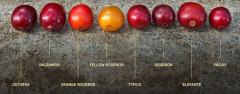
In the class of the coffee roaster training class, the proportion of the theory course is about 40%. Most of the time is operated and practiced by the students themselves. The college uses the Korean Tae-hwan roaster for training, and the students analyze the results of the cup test. Compare, adjust and summarize one by one, when it comes to the varieties of coffee trees in the theory class, in fact, we can talk a lot, but only as a discrimination of coffee flavor.

World-class coffee master Lim Dong-Won: to make coffee is to be creative
Lim Dong-Won, Virgo, founded GABEE in 2004. Italian professional cafe also won the championship of the first Taiwan Coffee Masters Competition in the same year and published GABEE. The perfect encounter between Latte Art coffee and milk. In 2006, he won the championship of the third Taiwan Coffee Masters Competition and published GABEE. Champion Creative Coffee "; in 2007, it became the first person to participate in the world coffee event.

Puerto Rican coffee beans world-class selection of coffee beans description
For the exchange of professional baristas, please follow the coffee workshop (Wechat official account cafe_style). Puerto Rico Yaocote Coffee is the best in the world. In 1736, coffee trees were introduced from Martinique to Puertp Rico. Most of the early coffee was grown by immigrants from Corsica. By 1896, Puerto Rico had the sixth largest coffee export in the world.
Taitung / Xinhua Organic Coffee beans fresh and mellow hand-made
"just to drink the organic" original "flavor!" Yeh Ming-Ming, the former monitor of the Xinhua coffee production and marketing class in Taitung, returned to his hometown to grow coffee more than a decade ago. At first, he just hoped to find a new way out for the villagers. Unexpectedly, the cultivated coffee beans were very popular, and organic coffee beans became one of Taitung's specialties. Ye Guangming, the babysitter of the people, said that although some villagers in the village had grown coffee beans in the early years, they had not grown coffee beans for a long time.